DAS document checker
Answer a few questions and get your personal paperwork list for disability access, before you fly.
Check my documents
Hotel rooms that can sell out in under a minute. Three different pass systems to learn before you land. Headliners with 100-minute queues, and one wrong call that can unravel the whole day. We live in Tokyo, and we will plan your day around your family, your mobility and your diet, so the hard part is finished before you arrive.
Written in Tokyo, twenty minutes from Maihama Station. We check the park facts every day, and the site is updated as soon as a change is confirmed.
Under a minutefor the most wanted Disney hotel rooms to go at the 11:00 drop, four months out
100+ minute waitsfor headliners like Frozen Journey and Soaring, even on ordinary weekdays
Three pass systemsDisney Premier Access (DPA, paid), Standby Pass and Entry Request, all decided in your first minutes inside the gate
Who we help
40+ tabs open, blogs contradicting each other, and one wrong call could ruin the day. Get the hour-by-hour plan, the booking order and the arrival strategy.
Plan my day Start free: see a sample day, hour by hour.
Which rides you can and can't do, transfer and evacuation rules, step-free routes, rest breaks, plus the full DAS paperwork playbook for overseas guests.
Accessibility guide Start free: check your DAS documents in two minutes.
Allergies, halal, vegan, coeliac, diabetes, and how a mixed-needs family eats together when every person needs something different.
Eating guide Start free: the starter phrase cards are inside the free guide.No email needed. Use them now, keep the answers.
Pass rules checked against Tokyo Disney Resort's official pages, 24 Oct 2026.
Answer a few questions and get your personal paperwork list for disability access, before you fly.
Check my documentsBought a Disney Premier Access pass? Work out the exact minute you can buy the next one, for a different ride, the same ride, and shows.
Work out my next passDisney hotel rooms open at 11:00 Japan time. See that moment in your own time zone, and set your alarm right.
Convert my booking timePremier Access, Entry Request, Standby Pass and the Priority Pass that ended in August 2026, compared on one page: what each one is, when you can get it, and what it covers in each park.
See them side by side
The free PDF
33 pages, both parks, one PDF. No spam, and we never sell your address.
The Calm Tokyo Disney Guide. 33 pages, both parks, free. The same pages we hand to friends flying in. Inside:
Rooms that sell out at the 11:00 drop often reappear around 11:40. It is a reported pattern, not a guarantee, and the guide shows you how to be ready for both. Read the hotel playbook.
Check your inbox to confirm, and your free guide follows.
We send the guide by hand for now, so it may take a few hours to reach you.
Fantasy Springs entry and Premier Access rules in this guide checked 24 Oct 2026.
How it works
Three steps, in the order you actually take them:
Services & pricing
Run by Aaron and Maya. We live in Tokyo, visit both parks ourselves, and personally check every itinerary before your trip.
Launch prices, live now. The $39 Guide & Toolkit can be bought now through Stripe. The $149 and $279 plans start with a call and are invoiced after it.
$39
The complete digital pack, for confident self-planners.
$149
One park day, planned around you, and talked through, live.
$279
The full service, for trips where the hotel matters as much as the day.
Clear notes, before you ask: park tickets are not included in any tier, and Premier Access availability can never be guaranteed, it depends on the day. We don't book hotels or tickets on your behalf; you always book in your own accounts. This is a planning and advice service, not an in-park guide service. Delivery and refunds: the Toolkit is delivered by email as digital files, and personal plans are delivered by email before your planning call. If we cannot deliver what you bought, we refund it in full. See the About page for who runs this and the full terms.
Home · Planning
The Overwhelmed Planner
Short answer: decide everything in advance: which rides justify paid Disney Premier Access (DPA), what you'll tap in the app in your first ten minutes inside the gate, when you'll eat, and where you'll rest. Tokyo Disney rewards a finished plan and punishes improvisation, because passes, restaurants and hotel rooms are all claimed at set times, in the app, in Japanese-time races. This page is the full playbook; our $149 Personal Park Plan turns it into your day.
You're the one planning for everyone, often a parent holding the whole family's one big Japan trip together. And Tokyo Disney does not work like the parks you know:
It depends on what you're chasing. If headliners and Fantasy Springs are the point of your trip, arriving early matters a lot: the first Premier Access slots, Standby Passes and short opening queues are all claimed in the first half hour, and keen guests queue well before the gates open. Disney hotel guests get Happy Entry through a dedicated entrance, 15 minutes early at Tokyo Disneyland, and 5 to 15 minutes at Tokyo DisneySea, which is a genuine head start on that rush. One limit to know: at Tokyo DisneySea, since September 2025, Happy Entry is only for Fantasy Springs Hotel and Hotel MiraCosta guests.
If your day is about shows, parades, atmosphere and a handful of rides, arriving after the entry crush, around 9:30, is genuinely fine, calmer, and much kinder to children and anyone who finds the pre-opening crowd stressful. Neither answer is wrong; the mistake is choosing by accident.
Almost everything at Tokyo Disney is a same-day, in-app reservation, and it can only be booked after you've scanned into the park. The order matters:
And remember the September 2026 change: the free 40th Anniversary Priority Pass ended on 31 August 2026. Rides that used to be free to skip now sit behind paid Premier Access, so budget for DPA on the headliners you care about.
Once that first pass is bought, the next question is when you are allowed to buy another one. The rule is not "wait an hour": our free DPA Clock works the official rule out from your own purchase time and return window, for a different ride, the same ride again, and shows. For the whole picture on one page, our pass systems, side by side comparison sets Premier Access against Entry Request, Standby Pass and the ended Priority Pass.
The two services maps below carry the quiet spots too, alongside baby care and nursing, first aid, smoking areas, Wi-Fi and battery rental, so one map per park holds every practical stop in a day. After them, the two day-flow maps walk our suggested order for a calmer day: the entry sequence from this page plus Flow A, the anxious first-timer flow from the free guide. A suggested order, not an official route.
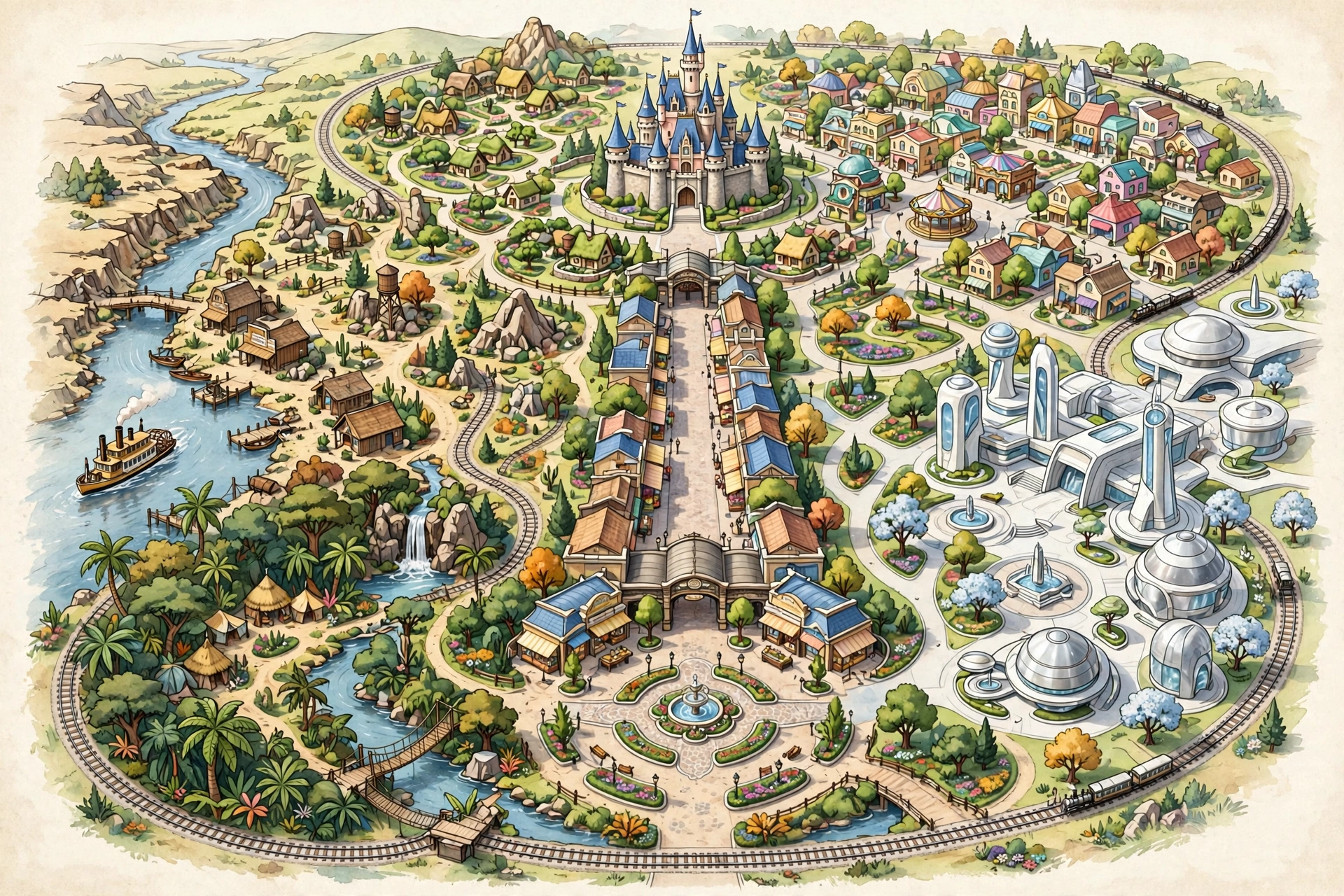
Designated smoking areas. These spots come from visitor guides, not an official text list, so check the official app map on the day. All park restaurants are non-smoking. List only: a third designated area sits outside the park at Bus Terminal West.
Free Wi-Fi is limited to the spots marked, in sessions of up to 15 minutes, with unlimited reconnects. It is not park-wide.
Mobile Battery Rental Service (ChargeSPOT). Station spots are indicative, from the service's 2021 launch report; stations move, so check the app on the day. Rent and return at any station; fees run from 350 yen for under an hour to 1,200 yen for 4 to 6 hours. List only: there is also a station in the main parking structure, outside the park.
Pins use a short code: B for baby care, + for first aid, S for smoking areas, Wi for Wi-Fi, P for battery rental (power) and Q for quiet spots. Tap a category above the map to see one kind of place at a time.
Multi-function restrooms (wheelchair accessible, with ostomate facilities at some) are located throughout the parks (official wording). Exact spots are on the official park map and in the app.
Drag to pan. Pinch, scroll or use the buttons to zoom. Tap a pin, or a place in the list, for details.
Park services and quiet spots, checked 24 October 2026. Our own illustration, not an official map. Locations are approximate. Tokyo Disney Expert is unofficial and unaffiliated with The Walt Disney Company, Tokyo Disney Resort or Oriental Land Co., Ltd.
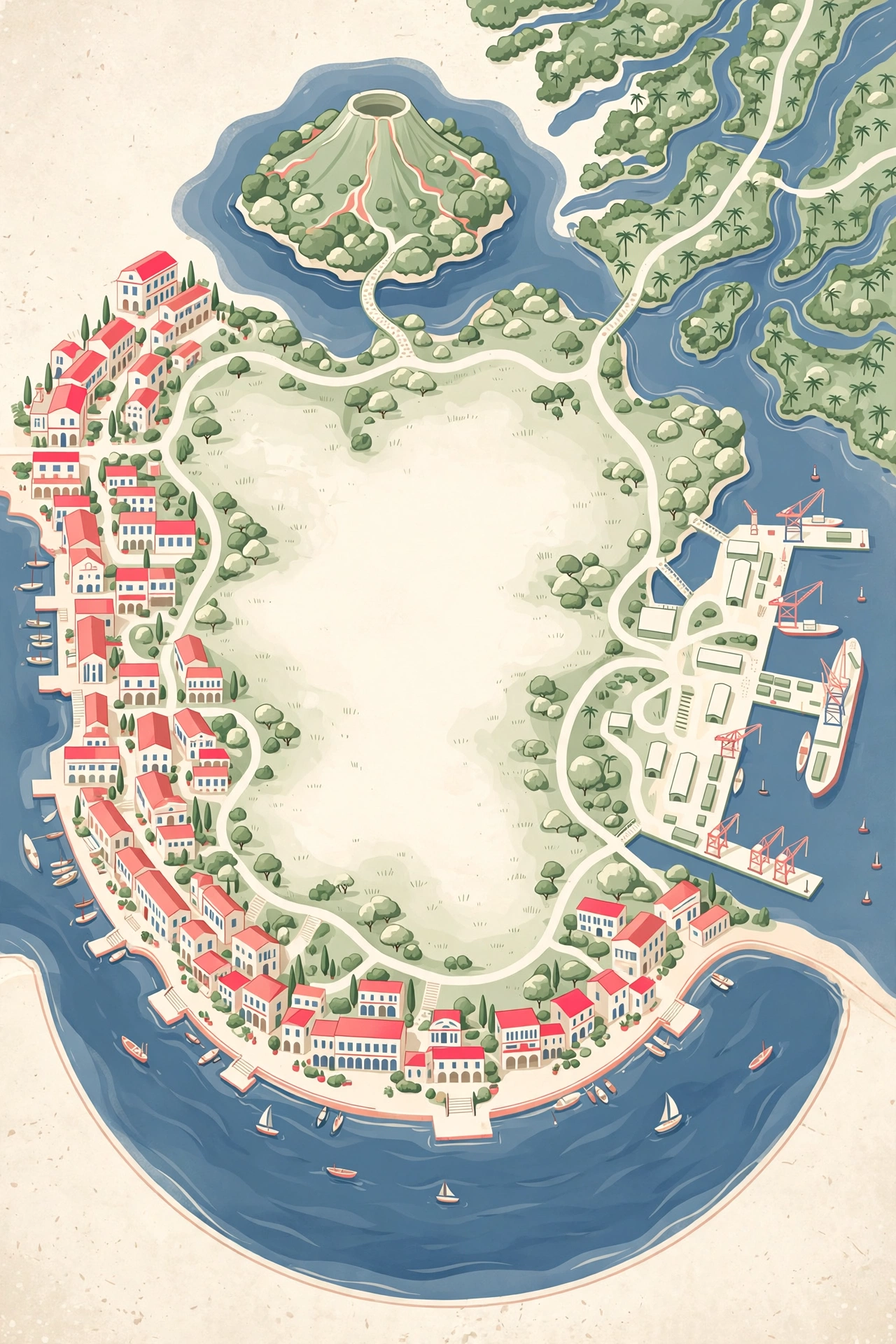
Designated smoking areas. These spots come from visitor guides, not an official text list, so check the official app map on the day. All park restaurants are non-smoking. List only: a third designated area sits outside the park by the South entrance parking.
Free Wi-Fi is limited to the spots marked, in sessions of up to 15 minutes, with unlimited reconnects. It is not park-wide.
Mobile Battery Rental Service (ChargeSPOT). Station spots are indicative, from the service's 2021 launch report; stations move, so check the app on the day. Rent and return at any station; fees run from 350 yen for under an hour to 1,200 yen for 4 to 6 hours. List only: stations also at Tokyo DisneySea Station (both exits) and the main parking structure, outside the park. Stations in Fantasy Springs are not yet verified on our list; check the app on the day.
Pins use a short code: B for baby care, + for first aid, S for smoking areas, Wi for Wi-Fi, P for battery rental (power) and Q for quiet spots. Tap a category above the map to see one kind of place at a time.
Multi-function restrooms (wheelchair accessible, with ostomate facilities at some) are located throughout the parks (official wording). Exact spots are on the official park map and in the app.
Drag to pan. Pinch, scroll or use the buttons to zoom. Tap a pin, or a place in the list, for details.
Park services and quiet spots, checked 24 October 2026. Our own illustration, not an official map. Locations are approximate. Tokyo Disney Expert is unofficial and unaffiliated with The Walt Disney Company, Tokyo Disney Resort or Oriental Land Co., Ltd.
Step through each flow with Previous and Next, or tap a stop in the list to jump to it. Flow A starts about 2 hours after opening on purpose. You will likely miss the hottest Premier Access slots; the trade is a calm walk-in, and it is the point of the flow.
Stop 1 of 7: Park entrance. Come in calmly and step aside, out of the flow, for two full minutes.
A suggested order, not an official route. Use Previous and Next above the map to walk the day stop by stop, or tap any stop in the list.
Flow A starts about 2 hours after opening on purpose. You will likely miss the hottest Premier Access slots; the trade is a calm walk-in, and it is the point of the flow.
Drag to pan. Pinch, scroll or use the buttons to zoom. Tap a pin, or a place in the list, for details.
A suggested order for a calmer day, drawn on our own illustration. Not an official route. Our own illustration, not an official map. Locations are approximate. Tokyo Disney Expert is unofficial and unaffiliated with The Walt Disney Company, Tokyo Disney Resort or Oriental Land Co., Ltd.
Stop 1 of 7: DisneySea Plaza, park entrance. Come in calmly and step aside, out of the flow, for two full minutes.
A suggested order, not an official route. Use Previous and Next above the map to walk the day stop by stop, or tap any stop in the list.
Flow A starts about 2 hours after opening on purpose. You will likely miss the hottest Premier Access slots; the trade is a calm walk-in, and it is the point of the flow.
Drag to pan. Pinch, scroll or use the buttons to zoom. Tap a pin, or a place in the list, for details.
A suggested order for a calmer day, drawn on our own illustration. Not an official route. Our own illustration, not an official map. Locations are approximate. Tokyo Disney Expert is unofficial and unaffiliated with The Walt Disney Company, Tokyo Disney Resort or Oriental Land Co., Ltd.
Tokyo Disney tickets are for one park per day, and no park hopper is on sale, so the choice matters. Tokyo DisneySea is unique to Japan, found nowhere else in the world, with bigger thrill rides and a harbour setting most adults love. Tokyo Disneyland suits first-timers and younger kids better: the classic castle park, more gentle rides, and the familiar layout. If you have two days, do one park each day rather than rushing a decision. Checked 24 October 2026.
Both parks sit beside Maihama Station on the JR Keiyo and Musashino lines, about 15 minutes from Tokyo Station. The Ikspiari shopping and dining complex is right beside the station, handy for a meal before or after the park. Inside the resort, the Disney Resort Line monorail loops the parks and the Disney hotels, with stations at Tokyo Disneyland, Tokyo DisneySea and Bayside for most Disney hotels. Checked 24 October 2026. Shopping works differently again, because the park shops, Bon Voyage and Disney Store Japan all sell different ranges: see Disney shopping in Japan: which shop sells what?
Weekdays outside Japanese school and public holidays are usually calmer than weekends and holiday periods. Whichever day you pick, arrive before opening if headliners matter to you. For summer heat and rainy days, plan the middle of the day around indoor shows, indoor attractions and real rest breaks rather than queueing through the worst of it. No day is guaranteed quiet. Checked 24 October 2026.
Table-service restaurants take advance Priority Seating bookings online from one month before the visit. Show restaurants are prepaid in advance. For quick-service spots, mobile order in the app covers many locations, and ordering lunch around 10:30 beats the noon rush. Checked 24 October 2026. Official restaurant lists: Official restaurant list, Tokyo Disneyland (Tokyo Disney Resort) and Official restaurant list, Tokyo DisneySea (Tokyo Disney Resort).
An adult 1-Day Passport costs ¥8,900 to ¥12,400 depending on the date. Disney Premier Access costs ¥1,000 to ¥2,500 per ride, per person. Park tickets go on sale two months ahead at 14:00 JST. Prices change and no price is guaranteed. Checked 24 October 2026. See Official park tickets page (Tokyo Disney Resort).
Entry to Fantasy Springs has been open to all guests since April 2025. Its headliner rides use Disney Premier Access or standby, and morning arrival matters because the best Premier Access times go early. Checked 24 October 2026.
Wheelchair rental is available in-park without a reservation, and there is no motorised scooter rental inside the parks. Sensory and neurodivergent guests should also read about the DAS page and the Separate Wait Service, which needs no certificate, before deciding what support to ask for on the day. Checked 24 October 2026.
Official links (Tokyo Disney Resort, you will leave our site)
Planning questions? See the full answers on the FAQ page, the single place we keep them updated.
Home · Wheelchair & Mobility
Wheelchair & Mobility
Short answer: it varies ride by ride, and Tokyo is stricter than most visitors expect. Many attractions require you to transfer from your wheelchair and be able to evacuate in an emergency, sometimes including stairs. 11 DisneySea attractions are effectively must-be-ambulatory. The workable approach is a ride-by-ride can / can't / transfer-required list for your situation, step-free routing, and planned rest breaks, all settled before you fly, which is what this page walks through.
Think of the park like a walking route, not a ride list. We sequence attractions land by land, in one direction, so you're never crossing the park and back. Each loop is planned around three anchor points:
This route is our suggested flatter loop. Rest stops are quiet spots we use ourselves; step free access at each stop is being rechecked, and the official app shows lift and closure information on the day.
Multi-function restrooms (wheelchair accessible, with ostomate facilities at some) are located throughout the parks (official wording). Exact spots are on the official park map and in the app.
Drag to pan. Pinch, scroll or use the buttons to zoom. Tap a pin, or a place in the list, for details.
Our DisneySea step-free route. Check the official app on the day for lifts, closures and current routes. Our own illustration, not an official map. Locations are approximate. Tokyo Disney Expert is unofficial and unaffiliated with The Walt Disney Company, Tokyo Disney Resort or Oriental Land Co., Ltd.
Step-free route: the dotted coral line is our suggested one-direction loop from the day plan on this page: land by land, so you never cross the park and back. It is a planning aid, not an official route.
Multi-function restrooms (wheelchair accessible, with ostomate facilities at some) are located throughout the parks (official wording). Exact spots are on the official park map and in the app.
Every restroom in the parks has a diaper-changing station, except the one at Fort Sam Clemens on Tom Sawyer Island.
Drag to pan. Pinch, scroll or use the buttons to zoom. Tap a pin, or a place in the list, for details.
Our Disneyland step-free loop. Check the official app on the day for lifts, closures and current routes. Our own illustration, not an official map. Locations are approximate. Tokyo Disney Expert is unofficial and unaffiliated with The Walt Disney Company, Tokyo Disney Resort or Oriental Land Co., Ltd.
Visitors often use "wheelchair policy" as one phrase, but Tokyo Disney runs three separate systems, and each solves a different problem:
This is about the ride itself, not the queue. Each attraction sets its own requirement: some let you board staying in your wheelchair, many require a transfer to the ride seat, and some require you to be able to evacuate in an emergency, walking, sometimes down stairs. Where evacuation isn't possible for you, the ride is off the table no matter what pass you hold. This is why 11 DisneySea attractions are effectively must-be-ambulatory (count from the official Tokyo Disney Resort attraction accessibility information, checked 24 October 2026).
DAS is about the queue: if waiting in a physical line isn't possible for you, DAS lets you wait outside the queue and return at your time. It does not shorten the wait itself. You arrange it at each attraction with a Cast Member, with the holder present, showing your certificate and your group's tickets. Overseas paperwork is the part people get wrong, we've given DAS its own page with the step-by-step playbook. You can also run our free DAS document checker to build your personal document list and draft a doctor's letter before you go.
Separate from DAS, the parks operate arrangements that let a group split waiting duties, one part of the party waits while the guest who can't queue waits elsewhere with a companion, then reunites to board. Combined with the discounted disability park passport (available for the guest with a qualifying disability certificate, plus one companion), these are the tools that make a full day realistic rather than exhausting. Confirm which arrangements apply to your party with a Cast Member at the attraction on the day, staff decide, and rules can change.
There is no scooter (ECV) rental inside the parks. Manual wheelchairs can be rented in-park without a reservation, and motor-assisted and electric wheelchairs are also among the park rentals, but if your day depends on your own powerchair setup, bring it or arrange one outside the resort. Sensory and neurodivergent guests: start with the DAS page and ask about the Separate Wait Service, which needs no certificate. Checked 24 October 2026, no guarantees.
Official links (Tokyo Disney Resort, you will leave our site)
Accessibility questions? See the full answers on the FAQ page. For DAS paperwork, read the DAS playbook.
Home · Wheelchair & Mobility · DAS
DAS & Disability Access
Short answer: DAS (Disability Access Service) is arranged at each attraction, not once for the whole day. At each attraction where you want to use it, speak to a Cast Member at the attraction entrance, with the DAS holder present, and show your original disability certificate and the park tickets for everyone in your group. At an attraction DAS covers up to six people in total; at character greetings, up to ten. Staff set a return time for that attraction. A doctor's letter on official letterhead stating that you cannot wait in a physical queue is commonly brought by overseas guests whose home-country certificate is not issued or not recognised, but whether it is accepted is decided by staff on the day. A disability card alone has been refused. Eligibility is always decided by park staff on the day; nobody can promise it.
DAS lets a guest who cannot wait in a conventional queue wait outside the physical line and return at their allotted time to board. It does not shorten the total wait, it changes where you wait, which for many guests is the difference between a possible day and an impossible one. You can hold only one DAS return time at a time: use or pass that return time before arranging the next one. DAS can be combined with paid Premier Access.
Not sure which of these you can actually get hold of? Our free DAS document checker asks four questions about your situation, builds your personal document list, and then drafts a doctor's letter you can take to your own doctor. It runs entirely in your browser; nothing you enter is collected, stored or sent anywhere.
Official links (Tokyo Disney Resort, you will leave our site)
Free tool
Short answer: for most overseas guests it comes down to two documents. Bring your original home-country disability certificate if you have one, and a doctor's letter on official letterhead stating in functional terms that the guest cannot wait in a conventional line; overseas guests report that the letter is the most reliable document when a certificate is missing or not recognised. You also need every party member's park ticket. Bring photo ID as well, a passport is the usual choice for overseas guests, so staff can match the documents to the guest if they ask. Answer four questions below and this tool builds your personal checklist, then helps you draft the doctor's letter. Cast Members decide eligibility at the park, and no document guarantees acceptance.
Four questions, one at a time. Your checklist appears at the end, built from your answers. It prepares your paperwork; it does not register you for DAS, and it cannot predict what staff decide on the day.
Question 1 of 4
For example a national disability certificate, a disability ID card, or a similar official document issued where you live.
A short letter on the doctor's official letterhead. Part 2 of this page helps you draft one to take to them.
Choose the closest fit. This changes the advice in your checklist, not just the documents.
Registration at each attraction needs the whole party's tickets, so the tickets question matters as much as the medical documents.
Travelling with someone who has the difficulty means a party of at least 2: you and the guest with the difficulty. If your party size was set to 1, we have corrected it to 2. Choose a larger size if more people are travelling.
Does everyone in the party have their own park ticket?
Fill in the details and this tool writes a clean draft letter in formal, plain English. Print the draft and take it to the doctor: the letter only counts once the doctor has reviewed it, edited it, and reproduced it on their official letterhead with their own signature. Like everything on this page, the drafting happens in your browser and nothing is sent anywhere.
That opens the letter by itself, ready to print from your browser or save as a file. Take the printed draft to the doctor and ask them to review it, edit it, and reproduce it on their official letterhead with their own signature, date and stamp. The draft carries the notice at the top, so the doctor can see exactly what it is.
Official links (Tokyo Disney Resort, you will leave our site)
Home · Dietary Restrictions
Dietary Restrictions
Short answer: by choosing restaurants and dishes before you go. Tokyo Disney kitchens cannot modify dishes, no swaps, no "hold the sauce", so the only real solution is advance selection: the official allergen information and low-allergen menus, the plant-based options marked in-park, and a plan for each meal. There is no halal-certified restaurant in either park. For mixed families, the strategy that works is: everyone buys what suits them, and you eat together, details below.
The official site publishes allergen information you can search by item (covering the major allergens Japan requires and recommends labelling for), and selected restaurants offer a low-allergen menu designed to exclude the main allergen groups. Two limits to plan around: the low-allergen menu isn't guaranteed allergen-free (shared kitchens, cross-contact is possible), and because dishes cannot be modified, "almost right" dishes stay almost right. Always confirm ingredients with restaurant staff on the day, menus change seasonally.
Filled coral pins are our anchor picks, the three World Bazaar restaurants we start from. Numbered pins match the list. Use the filter above the map to show the anchors only, or every restaurant on the official list.
From 2 Nov 2026 the stew and curry rotation also reaches China Voyager, Plaza Pavilion Restaurant, Grandma Sara's Kitchen, Huey, Dewey and Louie's Good Time Cafe and Tomorrowland Terrace, and The Diamond Horseshoe adds a show-dining Special Dietary Menu from 21 Nov 2026. The roster changes seasonally, so check the official allergen page before you go.
Drag to pan. Pinch, scroll or use the buttons to zoom. Tap a pin, or a place in the list, for details.
Restaurants serving the official Special Dietary Menu (the low-allergen menu), checked 24 October 2026. Menus rotate, so confirm on the day. Our own illustration, not an official map. Locations are approximate. Tokyo Disney Expert is unofficial and unaffiliated with The Walt Disney Company, Tokyo Disney Resort or Oriental Land Co., Ltd.
Filled coral pins are our anchor picks. Numbered pins match the list. Use the filter above the map to show the anchors only, or every restaurant on the official list. The core dishes are the Vegetable Stew with Rice and the Vegetable Curry with Rice.
Drag to pan. Pinch, scroll or use the buttons to zoom. Tap a pin, or a place in the list, for details.
Restaurants serving the official Special Dietary Menu (the low-allergen menu), checked 24 October 2026. Menus rotate, so confirm on the day. Our own illustration, not an official map. Locations are approximate. Tokyo Disney Expert is unofficial and unaffiliated with The Walt Disney Company, Tokyo Disney Resort or Oriental Land Co., Ltd.
Official links (Tokyo Disney Resort, you will leave our site)
There is no halal-certified restaurant inside either park, anyone who tells you otherwise is guessing. The honest guidance: many Muslim guests choose seafood or plant-based dishes according to their own practice, use the allergen/ingredient information to avoid pork and alcohol-based ingredients where listed, and confirm with staff using the phrase cards below. For certified halal meals, plan them outside the parks (for example near your hotel or in Tokyo itself) and treat park eating as the flexible meal of the day.
The parks offer dishes built around the plant-based options marked on menus, and these are the reliable core of a vegan or vegetarian day. Watch the traps: Japanese cooking uses dashi (fish-based stock) in dishes that otherwise look vegetable-only, and soups, curries and sauces are where it hides. Your plan should name the specific dishes, not just the restaurants.
The easiest restriction to satisfy here, seafood is everywhere, from the port-themed restaurants at DisneySea to sushi-influenced counters. The work is mostly about variety and timing: mobile-ordering the popular seafood spots before the noon rush.
Coeliac visitors report the hardest time of any group. Wheat is one of the labelled allergens, so the allergen search helps, but soy sauce (which contains wheat) is pervasive, and note that barley is a separate item in Japanese labelling, so "wheat-free" doesn't automatically mean gluten-free to a coeliac standard. The low-allergen menu is the safest in-park base; many coeliac guests also use the bring-your-own arrangement described below.
The basics that help: mobile-order at set times so meals happen on your schedule rather than the queue's, build the day plan around regular meal and snack points rather than long gaps, and know that the free guide's alternative flows already include a diabetes-friendly structure. Carry your usual supplies as you would anywhere; park first-aid locations can help on the day.
This is the part nobody writes down, and it's the answer for most real families, one person vegan, one allergic to wheat, one who just wants ramen:
A starter set of cards, also in the free guide, show the Japanese line to staff; the romaji is for you. The full set for each restriction is in the $39 Toolkit.
Dietary questions? See the full answers on the FAQ page, the single place we keep them updated.
Home · Disney Hotels
The Hotel Problem
Short answer: because every room for a date is released at the same moment: 11:00 JST, exactly four months before check-in, and the most wanted hotels (MiraCosta, Fantasy Springs Hotel) have far more people waiting than rooms. It isn't the end, though: rooms predictably come back about 40 minutes later (abandoned bookings) and again around 14–15 days before check-in (cancellations). This page is the full timeline and the booking-window support planned around it.

Disney hotel rooms open for booking at 11:00 JST, exactly four months before check-in, and the most wanted hotels, MiraCosta and Fantasy Springs, can sell out in under a minute. Most overseas visitors never even learn the window exists until the trip is already set. Vacation Packages open even earlier, around five months ahead.
Rooms do come back, at predictable moments. Our Booking-Window Support will teach you the tactics in advance, with reminder emails three days before the hotel drop, on the morning of the drop, and at the start of the cancellation window, so you can be watching the right page at the right second instead of refreshing for weeks. Live alerts are not running yet.
The exact minute bookings open. We make sure you're logged in, on the right page, with payment ready, before the clock, not after it.
Abandoned and timed-out bookings fall back into inventory roughly 40 minutes after the drop. Most people have given up by then. This is one of the moments the planned reminder emails will cover as the plans launch.
Cancellations cluster around 14–15 days before check-in, when free-cancellation deadlines bite. The second wave of rooms appears here, and this is another moment the planned reminder emails will cover as the plans launch.
The single most common confusion: a Vacation Package price is per person, not per family. A 2-day package for three people can come to roughly $2,400 to $2,500 in total, around $800 per person, depending on the hotel and dates. For that per-person price you typically get the Disney hotel nights, park tickets for each day, a set of attraction passes, and extras like a drink ticket, depending on the plan. Packages open roughly five months ahead. Always multiply by party size and compare against booking hotel + tickets separately, sometimes the package wins, sometimes it really doesn't.
Your exact moment, in your time zone: our free Booking time converter turns the 11:00 JST drop, the 11:40 returns pattern and the 14:00 JST ticket sale into your local time, with a live countdown and a calendar file you can save.
Official links (Tokyo Disney Resort, you will leave our site)
Hotel questions? See the full answers on the FAQ page, the single place we keep them updated.
Home · Tools
Free tool
Short answer: Disney hotel rooms open at 11:00 in the morning, Japan time, exactly four months before your check-in date, and park tickets go on sale at 2:00 in the afternoon, Japan time, two months before your visit. Converting Japan time by hand is where trips go wrong, so we built this converter: enter your check-in date and your home time zone, and it shows you both moments in your local time and in Japan time, with a live countdown and a calendar file you can save. It is free, and everything is worked out in your browser.
Disney hotel rooms open
Park tickets go on sale
This is for your first park day. We use the check-in date you entered as your first park day. If your first park day falls on a different date, enter that date instead and read this ticket line only.
If the hotel sells out, check again that morning
Cancelled and abandoned rooms often reappear around this time, about 40 minutes after the opening. That is a reported pattern, not a guarantee, so treat it as a second chance worth watching, never as a promise.
Countdown to the hotel room opening
Working it out…
Save the moment
Add the hotel room opening to your calendar. The file is created in your browser when you tap the button, and it includes an alert one hour before the opening so you can be logged in and ready.
Paid $279 clients get these dates worked out for them, with reminder emails before each window (see the plans on the home page). This free tool never asks for your email, and the calendar file above sets the same reminder on your own device today.
We count back in calendar months from your check-in date, four months for hotel rooms and two months for park tickets, then set the opening at 11:00 or 14:00 Japan time on that date. The conversion to your time zone uses the standard international time zone database built into your browser, so daylight saving changes and the date line are handled properly. Japan itself never changes its clocks, but your home time zone may change between now and the opening, and the two moments can sit on different sides of a clock change. That is exactly why fixed offset maths, the kind that just adds or subtracts nine hours, gives the wrong answer.
Free tool
Short answer: it depends which pass you want next. For a different attraction, you may buy again at the earlier of two moments: 60 minutes after you bought, or when your return window starts. For the same attraction again, you may buy once you have ridden it, or after its window has passed. Shows and parades run on a separate track and never block an attraction purchase. Put your own times into the clock below and it draws your day.
Enter the time you bought, or plan to buy, your first pass, and the return window printed on it. We have filled in a worked example, bought at 09:05 with a window from 10:30 to 11:30, so you can watch the clock working before you change anything.
Change any time and the clock redraws straight away. All times are park times on the same day.
Your day on one line
Very late in the day: this unlock lands late in the park day. Premier Access is sold in limited numbers and may have sold out well before then, and the park day itself may be over, so read the time as what the rule allows, not as a plan.
Next: a different attraction
Next: the same attraction again
As soon as you ride it
Next: a show or parade
One more thing from the official page: after each purchase, the app itself displays the exact time you can next purchase. This clock explains the rule behind that time; if the two ever seem to disagree, the app is the final word.
The rule restarts from each new purchase. A third pass, for a different attraction, unlocks 60 minutes after you buy the second one, or at the start of the second pass's window, whichever is earlier. If you already know when you will buy the second pass, and what window it will carry, put those times in here and the clock works out the third unlock as well, and adds it to the timeline above.
One honest gap in the official wording: it gives no separate rule for buying a third pass while you still hold an unused second pass for the same ride. The same-attraction rule is stated per purchase, so each pass you hold follows it in turn: ride it, or let its window pass, before buying that ride again.
Fill in both times and the third unlock appears here.
A third pass, for a different attraction, unlocks at
Free tool
Four systems, one page. Tokyo Disney Resort, checked 25 Oct 2026.
The access systems at Tokyo Disney confuse almost everyone, because they have similar names and all of them live in the same official app. It does not help that many guides still describe the free Priority Pass as something you can book, even though it ended on 31 Aug 2026. This page puts all four side by side, as they work today.
| System | Disney Premier AccessPAID · IN THE APP | Entry RequestFREE · LOTTERY | Standby PassFREE · SHOPS ONLY | Priority PassENDED 31 AUG 2026 |
|---|---|---|---|---|
| What it is | Paid skip-the-line pass, bought per attraction or show. Attractions ¥1,000 to ¥2,500, shows ¥2,500, seasonal parades ¥3,500. | Free lottery in the app for shows and character greetings. | Free pass in the app that controls entry to certain shops on busy days. | The free 40th Anniversary Priority Pass. |
| When you can get it | After you enter the park, in the official app. | On the day, during the application window set for each experience. | After park entry, in the app, on days when a shop requires one, such as busy and new-release days. | It ended on 31 Aug 2026. There is nothing to book. |
| How it works | Choose the ride or show, pay, and pick a return window for attractions. | Send one request and the app draws the winners. A lottery, never first come, first served. | Take a pass for one shop, then enter inside your set entry window. | Some of its rides moved to paid Premier Access. The rest are standby only now. |
| How often | Different attraction: the earlier of 60 minutes after buying or your window start. Same attraction: once ridden, or its window passed. Shows: a separate track, same rule. | One request per experience, per day. | One shop pass at a time. For a different shop, another pass opens 120 minutes after you took the first, or at its return time, whichever is earlier. For the same shop again, after you have used it or its time has passed. | No longer runs. |
| Tokyo Disneyland | Enchanted Tale of Beauty and the Beast ¥2,500Splash Mountain ¥1,500Big Thunder Mountain ¥1,500Pooh's Hunny Hunt ¥1,500 | Mickey's Magical Music WorldThe D-Groovationz4 Live | Designated shops only, on the days they require one. | Former rides now run on Premier Access or the standby line. |
| Tokyo DisneySea | Anna and Elsa's Frozen Journey ¥2,500Soaring: Fantastic Flight ¥2,500Toy Story Mania! ¥2,000Journey to the Center of the Earth ¥2,000Tower of Terror ¥1,500 | Big Band Beat | Designated shops only, on the days they require one. | Former rides now run on Premier Access or the standby line. |
| Good to know | Headline rides can sell out early in the day. The next purchase time shown in the app is the one that counts. | Lose the draw? A few venues may offer standby seating if capacity allows; check the app on the day. Entry is never guaranteed. | Shops only now. It no longer covers attractions or restaurants. | If a guide or video still tells you to book one, it is out of date. |
Paid skip-the-line pass, bought per attraction or show. Attractions ¥1,000 to ¥2,500, shows ¥2,500, seasonal parades ¥3,500.
After you enter the park, in the official app.
Choose the ride or show, pay, and pick a return window for attractions.
Different attraction: the earlier of 60 minutes after buying or your window start. Same attraction: once ridden, or its window passed. Shows: a separate track, same rule.
Enchanted Tale of Beauty and the Beast ¥2,500Splash Mountain ¥1,500Big Thunder Mountain ¥1,500Pooh's Hunny Hunt ¥1,500
Anna and Elsa's Frozen Journey ¥2,500Soaring: Fantastic Flight ¥2,500Toy Story Mania! ¥2,000Journey to the Center of the Earth ¥2,000Tower of Terror ¥1,500
Headline rides can sell out early in the day. The next purchase time shown in the app is the one that counts.
Free lottery in the app for shows and character greetings.
On the day, during the application window set for each experience.
Send one request and the app draws the winners. A lottery, never first come, first served.
One request per experience, per day.
Mickey's Magical Music WorldThe D-Groovationz4 Live
Big Band Beat
Lose the draw? A few venues may offer standby seating if capacity allows; check the app on the day. Entry is never guaranteed.
Free pass in the app that controls entry to certain shops on busy days.
After park entry, in the app, on days when a shop requires one, such as busy and new-release days.
Take a pass for one shop, then enter inside your set entry window.
One shop pass at a time. For a different shop, another pass opens 120 minutes after you took the first, or at its return time, whichever is earlier. For the same shop again, after you have used it or its time has passed.
Designated shops only, on the days they require one.
Designated shops only, on the days they require one.
Shops only now. It no longer covers attractions or restaurants.
The free 40th Anniversary Priority Pass.
It ended on 31 Aug 2026. There is nothing to book.
Some of its rides moved to paid Premier Access. The rest are standby only now.
No longer runs.
Former rides now run on Premier Access or the standby line.
Former rides now run on Premier Access or the standby line.
If a guide or video still tells you to book one, it is out of date.
Two free tools pick up where this page stops. The DPA Clock works out the exact minute your next Premier Access purchase unlocks, from your own purchase time and return window. And if you are travelling with a disability, the DAS document checker builds your personal list of disability access documents, before you fly.
Home · Hotels · Alerts example
Example page
Example · Sample data
This page is a demonstration, and everything on it is sample data. It replays one demonstration run of the alert support we are building, so you can see what a watch is, what an alert looks like, and how quickly a room can appear and vanish. Live alerts are not running yet. They are planned as part of the paid plans, and no real rooms are being watched or monitored for anyone right now. Every availability status, price and alert below comes from the demonstration run, not from the live reservation system.
The three sample watches
Check 1 of 8
Autoplay is off because your device prefers reduced motion. Use the Back and Next check buttons, or tap a check number, to step through the demonstration.
Vacancy calendar, sample data
Hotel MiraCosta · Terrace Room, Harbor View
Fantasy Springs Hotel · Any room
Tokyo Disneyland Hotel · Standard room
Alert feed, sample alerts
Sample data: every availability status, price and alert in the demo above comes from a demonstration run. This page does not watch or monitor any real rooms, and nothing here is live.
Three lessons carry over from the demo to real booking windows, and the figures behind them are worth stating carefully. They are reported by a Japanese hotel alert service from its own published patrol data; they are that service's numbers, not ours, and we have not independently verified them.
Live alerts are not running yet, so here is what you can actually use today. The free Booking time converter works now: enter your check-in date and it gives you the 11:00 JST opening in your own time zone, with a countdown and a calendar file. The Disney hotel playbook explains the drop, the release and the cancellation window in full. And when the paid plans launch, saved dates in the converter will come with email reminders at the booking windows: a few days before each opening, and again on the morning itself.
Home · FAQ
Questions, Answered Honestly
Short answer: the questions we hear most, over and over: package prices are per person, hotel rooms open at 11:00 JST four months out and the best go in under a minute, the free Priority Pass ended in August 2026, and DAS (Disability Access Service) is arranged at each attraction with a Cast Member, with your original certificate and your group's tickets. The full answers are below, including the ones that aren't what you hoped to hear.
Drawn from the questions filling Tokyo Disney groups and comment threads this month, answered straight, by Tokyo locals who live here. Facts last checked 24 October 2026 against official Tokyo Disney Resort information.
Per person. This is the single most common confusion. A package price that looks like the total for your family is almost always the price for one adult, a 2-day package for three people can come to roughly $2,400 to $2,500 in total, around $800 per person, depending on the hotel and dates.
For that per-person price you typically get the Disney hotel nights, park tickets for each day, a set of attraction passes, and extras like a drink ticket, depending on the plan. Always multiply by your party size before comparing a package against booking the hotel and tickets separately, sometimes the package wins, sometimes it really doesn't. More on the Hotels page
Vacation Packages open roughly five months ahead. Hotel rooms on their own open at 11:00 JST, exactly four months before check-in, not midnight, not "sometime that morning."
How fast? The most wanted hotels, MiraCosta and the Fantasy Springs Hotel, can sell out in under a minute. Being logged in, on the right page, with payment details ready before 11:00 is not a nicety; it's the whole game. That's exactly what our Booking-Window Support prepares you for.
Don't give up, rooms reappear at predictable moments. Abandoned and timed-out bookings release about 40 minutes after the drop, and cancellations cluster around 14–15 days before check-in, when cancellation deadlines bite. Community members also report that checking availability through a different hotel's listing page sometimes surfaces rooms the main search misses.
Our $279 tier includes booking-window support at those predictable moments: the 11:00 JST hotel drop, the reported returns around 11:40, and the cancellation window about two weeks out. Before your window opens you get a one page brief with your exact dates and times in your time zone and Japan time, the prep checklist, and reminder emails three days before the hotel drop, on the morning of the drop, and at the start of the cancellation window. Live room alerts are not part of this service. You always make the booking yourself, in your own account, here's how it works.
Happy Entry is early park entry through a dedicated entrance, before the general opening: 15 minutes at Tokyo Disneyland, and 5 to 15 minutes at Tokyo DisneySea, where it is limited to Fantasy Springs Hotel and Hotel MiraCosta guests. At Tokyo Disneyland it covers guests of participating Disney hotels. At Tokyo DisneySea, since September 2025, Happy Entry is limited to guests of the Tokyo DisneySea Fantasy Springs Hotel and Hotel MiraCosta; guests of other Disney hotels do not get Happy Entry at DisneySea. It can be suspended on certain days, so treat it as a head start rather than a guarantee, and always confirm the arrangement for your dates in the official app.
Those 15 minutes are genuinely valuable here: they put you ahead of the first pass-booking rush. Official Happy Entry page (Tokyo Disney Resort).
For headliners, often yes. Rides like Anna and Elsa's Frozen Journey, Soaring and Toy Story Mania! can pass 100-minute waits even on weekdays, and since the free Priority Pass ended in August 2026 there's no free alternative for them. Premier Access is paid, per ride and per person, and is booked in the app after you've entered the park, the best slots go in the first minutes.
Three systems, simply: Premier Access = paid, book a return time, skip the line. Standby Pass = free, and on busy or release days it is required just to enter certain shops. Entry Request = a free lottery for shows and greetings, you win a seat or you don't. A good plan decides in advance which of your rides justify paying. The full pass-timing playbook
Both are legitimate. Park tickets are date-specific, sold in advance only, and can sell out, there is no buying at the gate on the day.
The official site and app are the direct route and make changes simplest. Klook is a common alternative for overseas visitors whose cards the official site rejects, or who'd rather check out in their own currency and language. Either way: buy early, screenshot everything, and link the tickets in the app before you travel. Official park tickets page (Tokyo Disney Resort).
Honestly? It depends on what you're chasing. If headliners and Fantasy Springs are the point of your trip, arriving early matters a lot: the first Premier Access slots, Standby Passes and short opening queues are all claimed in the first half hour.
If your day is about shows, parades, atmosphere and a handful of rides, arriving after the entry crush, 9:30 or so, is genuinely fine, calmer, and much kinder to children and anyone who finds the pre-opening crowd stressful. Neither answer is wrong; the mistake is choosing by accident. This is one of the first things we settle in a personal plan.
At each attraction where you want to use DAS, speak to a Cast Member at the attraction entrance, with the DAS holder present, and show your original disability certificate and the park tickets for everyone in your group. At an attraction DAS covers up to six people in total; at character greetings, up to ten. Staff set a return time for that attraction. If your home country does not issue a recognised certificate, a doctor's letter on official letterhead is commonly brought, but acceptance is decided by staff on the day and is not guaranteed.
Be clear on what DAS does: it lets you wait outside the physical queue and return at your time. It does not shorten the wait itself. There's also a discounted disability park passport for the holder plus one companion, and DAS can be combined with Disney Premier Access (DPA). Nobody can promise an outcome, and you should distrust anyone who does. The full DAS playbook
The honest answer is: it varies ride by ride, and Tokyo is stricter than many visitors expect. A large number of attractions require you to transfer from your wheelchair and be able to evacuate in an emergency, sometimes including stairs. Some rides are effectively closed to guests who can't walk, 11 DisneySea attractions fall into that must-be-ambulatory category, and guests regularly discover this at the ride entrance, which is a miserable place to learn it.
That gap between expectation and reality is exactly why our accessibility plan exists: a ride-by-ride can / can't / transfer-required list for your situation, plus step-free routes and planned rest breaks, all settled before you fly. See the Wheelchair & Mobility page.
Partly, with planning. Kitchens cannot modify dishes, so substitutions aren't an option. A low-allergen menu exists at selected restaurants, but it isn't guaranteed allergen-free, and there is no halal-certified restaurant inside either park. Coeliac visitors report the hardest time of all.
The workable strategy is choosing restaurants and dishes in advance, restaurant by restaurant, and carrying Japanese phrase cards for your restriction so staff can confirm with you directly. That's the eating plan we build in the dietary service, see the Dietary page. Before you go, check dishes in the Official 28-allergen information search (Tokyo Disney Resort).
Tickets are for one park per day, and no park hopper is on sale. Tokyo DisneySea is unique to Japan and suits thrill seekers and adults. Tokyo Disneyland suits first-timers and younger kids best. With two days, do one park each day. Checked 24 October 2026, no guarantees. Maps: Official park map, Tokyo Disneyland (Tokyo Disney Resort) and Official park map, Tokyo DisneySea (Tokyo Disney Resort).
Take the train to Maihama Station on the JR Keiyo and Musashino lines, about 15 minutes from Tokyo Station. The Ikspiari shopping complex sits beside the station. The Disney Resort Line monorail loops the parks and the Disney hotels. Checked 24 October 2026.
Weekdays outside Japanese school and public holidays are usually calmer. Arrive before opening if headliners matter. In summer heat or rain, build the middle of the day around indoor shows and rest breaks. No day is guaranteed quiet. Checked 24 October 2026.
Table-service restaurants take advance Priority Seating bookings online from one month before the visit, and show restaurants are prepaid in advance. Many quick-service spots offer mobile order in the app; ordering lunch around 10:30 beats the noon rush. Checked 24 October 2026. Official lists: Official restaurant list, Tokyo Disneyland (Tokyo Disney Resort) and Official restaurant list, Tokyo DisneySea (Tokyo Disney Resort).
An adult 1-Day Passport is ¥8,900 to ¥12,400 by date, and Disney Premier Access is ¥1,000 to ¥2,500 per ride, per person. Tickets go on sale two months ahead at 14:00 JST. Prices change, nothing is guaranteed. Checked 24 October 2026. Official park tickets page (Tokyo Disney Resort).
Yes. Entry has been open to all guests since April 2025. Its headliner rides use Premier Access or standby, and morning arrival matters because the best times go early. Checked 24 October 2026, no guarantees.
Wheelchair rental is available in-park without a reservation. There is no motorised scooter rental inside the parks. Sensory and neurodivergent guests should look at DAS and the Separate Wait Service, which needs no certificate, and the Official disability services and DAS page (Tokyo Disney Resort). Checked 24 October 2026.
Home · About
About
Short answer: Tokyo Disney Expert is run by Aaron and Maya, a Tokyo couple. It is an independent planning service, not a travel agency and not part of Disney. Aaron and Maya plan your Tokyo Disney day: we live in Tokyo, visit both parks ourselves, and personally check every itinerary before your trip. We are the people who build your plan and the people you speak to on the planning call.
Aaron and Maya live in Tokyo and plan around how the parks actually run now: the 11:00 JST hotel booking window, the three pass systems in the app, and the access and dietary rules that are hard to piece together from abroad. The service focuses on the three groups who get stuck most often: overwhelmed planners, wheelchair and mobility guests, and guests eating with a restriction.
What we do not do matters just as much: no hotel or ticket booking on your behalf, no promise of Premier Access availability, and no promise of DAS eligibility. Park staff and park systems decide those things, and this site says so wherever they come up.
Home · Disney Shopping
Disney Shopping
Short answer: two different companies run the shops. The Oriental Land Company runs everything at the resort: the park shops, Bon Voyage, the Disney hotel shops and the resort app. Disney Japan runs Disney Store Japan and its online shop. They mostly do not sell each other's goods, so the shop you walk into decides what you can buy, and the wording on the item tells you which world it belongs to.
Tokyo Disney Resort is not run by Disney itself. The Oriental Land Company operates the parks under licence from Disney, and it makes and sells all resort merchandise. Japan's Disney Stores were once run by the same group, but Disney took them back in 2010, so today Disney Store Japan is Disney's own retail chain, with its own ranges designed for shops, not parks.
The two parks do not match each other either. Disneyland and DisneySea carry different ranges, with only a small overlap such as headbands, and even the anniversary numbering differs: 43rd anniversary goods at Disneyland, 25th at DisneySea. Bon Voyage, outside the gates, stocks lines from both parks.
Ignore the shop sign and the bag. Look at the wording printed on the item, its packaging or its tag: if it says Tokyo Disney Resort, Tokyo Disneyland or Tokyo DisneySea, it is a resort item. A Disney Store bag, receipt or shop name proves nothing: an official Disney Store bag is not official Tokyo Disney Resort merchandise. Disney Store Japan items carry Disney Store branding, and their Japan-only lines carry their own line names.
Four channels, four catalogues. The same character on the shelf is not the same product.
Hotel shop access, honestly: You do not need to be a staying guest to browse most Disney hotel shops: the Disneyland Hotel, MiraCosta and Ambassador shops welcome non-guests. Two exceptions: the Toy Story Hotel shop is for staying guests only, and the Fantasy Springs Hotel shop can only be reached from inside Tokyo DisneySea, so it needs a park ticket in practice. Partner hotels near the resort, such as Hilton Tokyo Bay and Sheraton Grande, also run gift shops with general resort merchandise.
Where the overlap really is: General resort goods, headbands, standard plush, sweets and stationery, are sold across all the resort channels: parks, Bon Voyage, hotel shops and partner hotel shops. The one genuine crossover between the two companies is online: the Tokyo Disney Resort section of DisneyStore.jp, open since July 2024. Everything else that looks like overlap is two different versions of a similar idea, which the next section shows.
Here is the whole page in one example. A kimono plush badge of the famous mouse couple, wearing traditional Japanese dress, exists in both worlds at the same time. The resort version dresses him in a black haori jacket and red hakama trousers, and its tag and stitching mark it as a Tokyo Disney Resort product. The Disney Store Japan version puts him in a blue kimono instead, made for Disney Store shelves. Same characters, same souvenir idea, two different products, two different tags, sold by two different companies in two different shops.
So when a listing or a helpful stranger says 'they sell the kimono plush at the other shop too', the honest translation is: they sell their version of it. If the version matters to you, and for collectors it usually does, buy the one in front of you, in the shop that sells it.
The resort app is a fifth shop hiding inside your park day, and it has the strictest rules of all:
DisneyStore.jp is the slower, calmer alternative: anyone can order, including its Tokyo Disney Resort section, but it is Japanese only, delivers within Japan only, and its resort range changes, so treat it as a second chance, not a plan.
Bon Voyage is the answer to the question visitors ask most: where can I buy park merchandise without a park ticket? It stands on the walkway between Maihama Station and Tokyo Disneyland, shaped like a giant suitcase, and it is open 8:00 to 22:00. No park ticket is needed, and locals treat it as a destination in its own right.
Four questions cover almost every shopping decision on a Tokyo Disney trip:
Official links (you will leave our site)
Shopping questions? See the full answers on the FAQ page, the single place we keep them updated.
The letter on its own, with nothing else around it. To print it or save it as a PDF, use your browser's print command while this view is open (on a phone, open the share menu and choose Print); only the letter prints. You can also download the letter as a file and print it later.